

Thanks to Our Partners: You Don’t Have to Reinvent the Wheel.
The world’s best platforms already harness AI—our job is to help you unlock their full power.
Harness Google's Power
Google Ads / PPC (formerly Adwords)
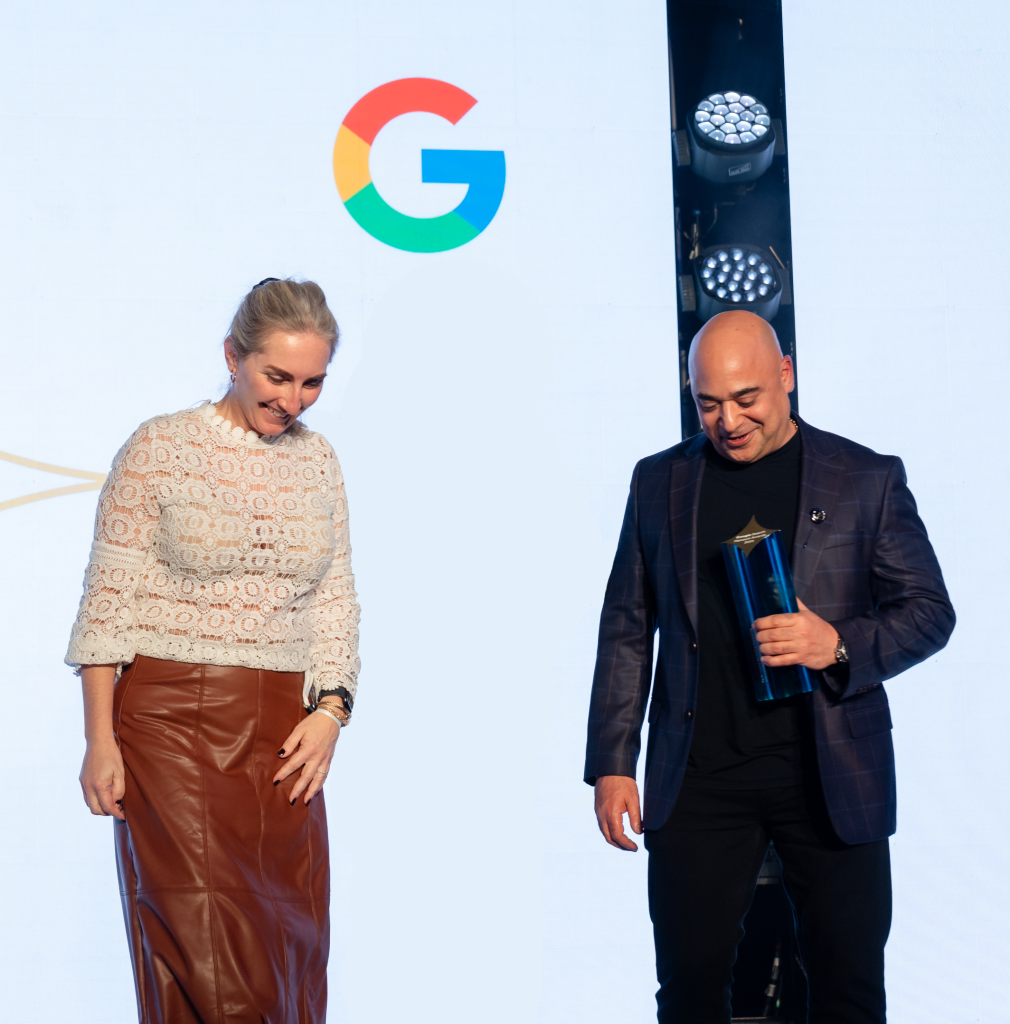
When your ideal customer is searching, your brand should lead. Many CEOs and CMOs face wasted spend (and sales resources) and low-quality leads — we fix that. As an award-winning Google Partner, we build high-performance campaigns that convert intent into results. Maximum visibility, minimum waste.
Google Performance Max Ads
Tired of fragmented campaigns and missed revenue? Performance Max delivers full-funnel precision. As an award-winning Google Partner, we harness AI to unify search, display, video, and shopping into one high-converting strategy. More reach. Smarter spend. Better results.
Google Demand Gen Video Ads
Google Demand Gen reaches over 3 billion monthly users across YouTube, Gmail, and Discover — and we ensure your ads show up where it counts. With advanced bid strategies and continuous optimization, we turn passive interest into real pipeline.
Supporting On-page and Off-page SEO
If your pages lack ranking signals, you won’t compete — with humans or AI. SEO is no longer optional. We build custom strategies that optimize your site from the inside out — aligning with Google’s search algorithm and the AI systems now shaping results. It’s SEO and AIO, working together to drive visibility.
We work with organizations who seriously want to scale their growth and that is evident in our approach.
-
Effective Budget Management
We watch trends and buyer activities, habits and signals, A/B test, experiment and leverage AI tools to ensure that your Google Ads budget is optimized and always achieving the maximum possible results.
-
Proven Methodology
We leverage proven methodology to maximizing your Google budget efficiently, increasing ROAS.
-
Data Driven
We are data-driven and constantly measure and re-optimize campaigns to ensure that they always perform to their full potential.
-
Lead Quality Matters
We are hyper focused to ensure that ad strategy aligns with the exact ICP you want to attract
Overcome Complexity and Scale Your Campaigns With Confidence
We help you overcome the complexity of Google Ads by providing the technical expertise needed to optimize and improve your campaigns’ performance in competitive landscapes. We help you allocate your budget and deploy big strategy that maximizes your ROAS. We help you build confidence in your Google Ads budget through calculated and strategic choices with predictable results. Scale confidently and maximize your current budget, exploring new Google Ads products that expose you to new audiences and revenue opportunities.
“Companies that work with top-tier Google-certified agencies see 38% higher ROI on their ad spend compared to those managing in-house or with uncertified vendors.” – Google Marketing Live 2025 Report – “Partnered for Performance” (Google Partners Program Internal Benchmarking, Q1 2025)
Google Ads and SEO FAQs
You need to go beyond Google’s native reporting. Real ROI comes from connecting Google Ads performance to your CRM or sales pipeline. That means tracking not just form fills, but which leads converted into revenue. Attribution modeling, offline conversion tracking, and CRM integration (e.g., HubSpot or Salesforce) give CEOs and CMOs visibility into which keywords and ads lead to closed deals — not just leads.
Answer Engines like ChatGPT are trained to surface information from authoritative, helpful, and contextually relevant sources. That means if your content ranks well in Google Search, answers user questions clearly, and demonstrates subject-matter authority — it’s more likely to be cited or referenced in AI-generated responses.
To position your business for visibility in AI responses:
-
Publish helpful content that directly answers key questions your audience has. This includes FAQs, how-tos, and problem-solving blog posts.
-
Focus on clarity, structure, and authority. AI models favor well-written, factually sound, and clearly formatted content.
-
Maintain strong SEO fundamentals. High-ranking pages are more likely to be crawled and used by large language models. That means: optimized page titles, headers, structured data, backlinks, and fast-loading pages all matter.
-
Keep your site crawlable and indexable. If AI can’t find your content, it can’t use it.
SEO and AI are now intertwined — everything you do to improve search performance will increase the likelihood of your business being mentioned or cited by tools like ChatGPT.
The default settings in Google Ads do not guarantee precision. You must layer audience intent signals, geography, device behavior, and even time of day. Using tools like audience observation, in-market segments, and custom intent audiences allows you to focus spend where it matters. CEOs should request a breakdown of where ads are being shown and to whom — and whether those impressions are tied to real conversions.
Google Ads can show early signals within weeks, but meaningful, optimized ROI usually takes 60–90 days. That’s because Google's machine learning needs data to improve delivery. CEOs often pull budgets too soon because the early days are “expensive learning.” A properly phased campaign should start with high-intent keywords, tight targeting, and aggressive optimization cycles, then scale into broader audiences once performance is stable.
Yes — if it's approached strategically. Google Ads gives you direct access to in-market buyers, but it’s not plug-and-play. Many mid-market companies overspend early because they treat it as a volume game instead of a precision strategy. With proper campaign structure, budget pacing, and conversion optimization, Google Ads can become a high-performing revenue channel. The key is ROI visibility, not vanity metrics like impressions or clicks.
Performance Max uses AI to distribute your ads across all of Google's platforms (Search, Maps, Display, YouTube), which can be powerful — if you have conversion data and a product or service that benefits from broad exposure. For most mid-market B2B firms, Search Ads remain the most direct route to intent-based buyers. CEOs should be cautious about jumping into Performance Max too early — it requires data volume and expert optimization to avoid wasted impressions.
Scaling requires controlled testing, not simply increasing budget. Start by identifying your highest-performing campaigns and audiences, then incrementally expand into similar match types, geos, or devices. Use Experiments in Google Ads to test changes before rolling them out account-wide. CMOs should measure Cost Per Lead (CPL) and Cost Per Acquisition (CPA) at every stage of scaling to avoid letting volume destroy profitability.
The most common reason Google Ads fail to deliver qualified leads is poor targeting and a lack of strategic segmentation. If your keywords are too broad or you're not using negative keywords, you're likely attracting low-intent clicks. Many mid-market firms also skip audience exclusions, meaning their ads show to irrelevant users. Fixing this starts with understanding buyer intent, auditing conversion paths, and ensuring that campaigns are optimized for both search intent and landing page experience — not just traffic.
Google uses keyword match types and AI-based interpretation, which often results in ads showing for loosely related searches — especially with broad or phrase match. To fix this, campaigns need strict negative keyword lists, regular search term audits, and clearly defined match types. CMOs should work with teams who review actual search queries weekly — not just keywords — to prevent wasted spend.
Rapid budget burn is typically due to loose match types, poor audience targeting, or incorrect bidding strategies. If you’re using broad match keywords without sufficient exclusions or structure, Google’s algorithm will cast a wide net — often too wide. Using tools like Maximize Conversions without conversion data also backfires. CEOs and CMOs should demand a budget efficiency audit that includes CPC analysis, Quality Score reviews, and bid strategy alignment with actual deal stages.